



7 Automotive Ecommerce Tools to Connect in 2026
Build a connected automotive ecommerce stack with inventory, AI search, chat, finance, appointments and CRM measurement. Includes a practical buyer checklist.
 Jarkko Oksanen · Co-founder & CTO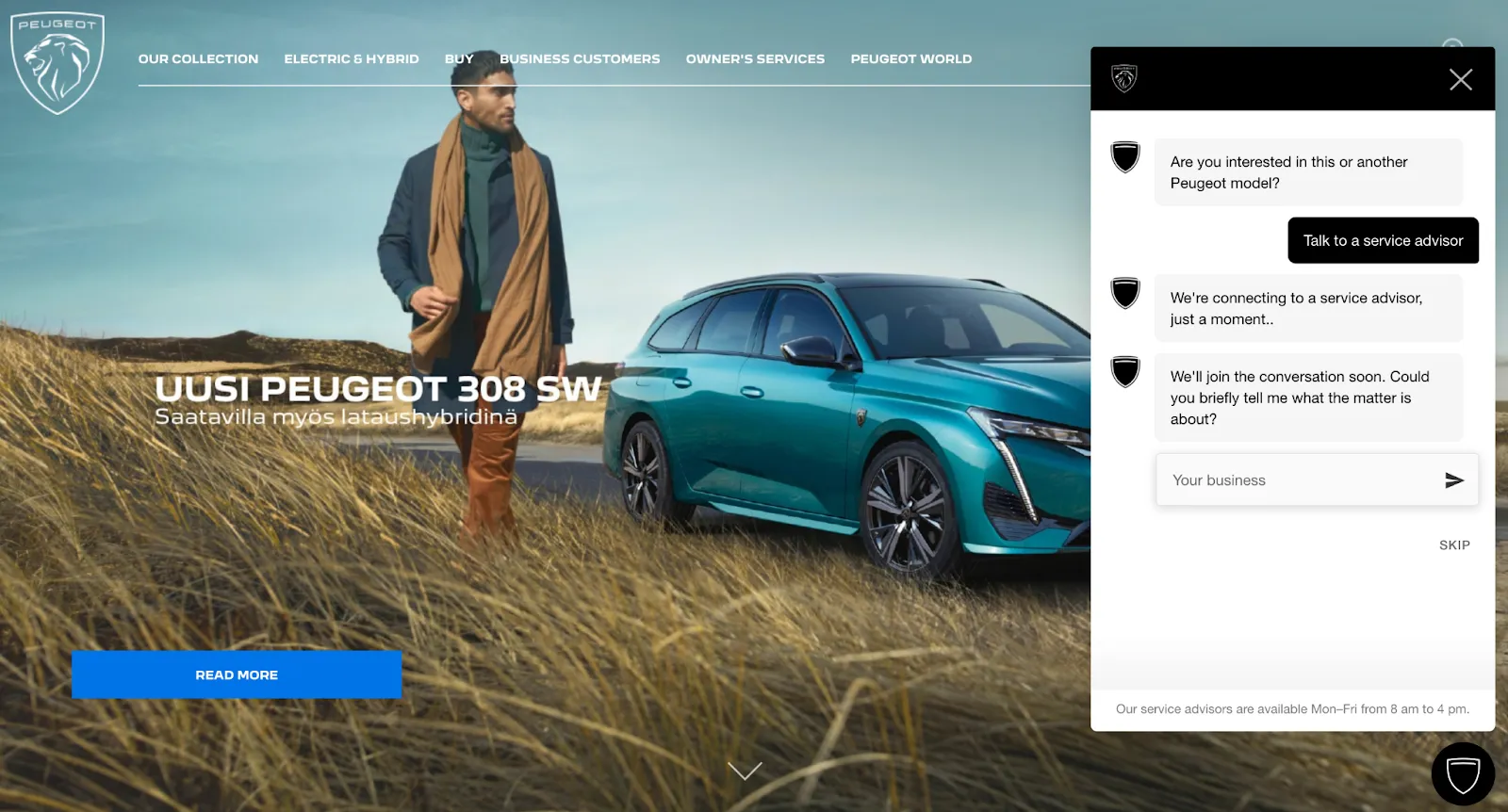
A dealership does not need another pile of disconnected applications. It needs seven connected capabilities: publish accurate stock, help buyers search, answer, qualify, calculate, book and measure.
This is not a vendor ranking. It is a buying framework for a coherent automotive ecommerce journey. Our separate guide covers examples of what an automotive chatbot can do; this article focuses on the wider operating stack.
1. A reliable inventory source
Everything starts with stock. Your DMS, listing-management system or vehicle feed should give the website current data:
- availability;
- displayed price and conditions;
- make, model, trim and powertrain;
- mileage and equipment;
- images and vehicle-detail URL;
- responsible dealership location.
Without that foundation, search, chat and sales teams can show different answers. Check feed frequency, field completeness and how reserved or sold vehicles are handled before adding another tool.
2. AI-guided vehicle search
Filters remain useful for a buyer who already knows the model. Natural-language search serves someone who thinks in needs: “family car with a large boot”, “EV for 300 kilometres a week” or “compact van within my budget.”
The tool should query real stock, explain trade-offs and link to actual listings. It should never invent availability, price or specifications.
Evaluate it with:
- a precise model request;
- a lifestyle request;
- contradictory criteria;
- a vehicle that is not in stock;
- a correction during the conversation.
Our AI car search guide explains the inventory architecture and testing process in more depth.
3. A page-aware chatbot
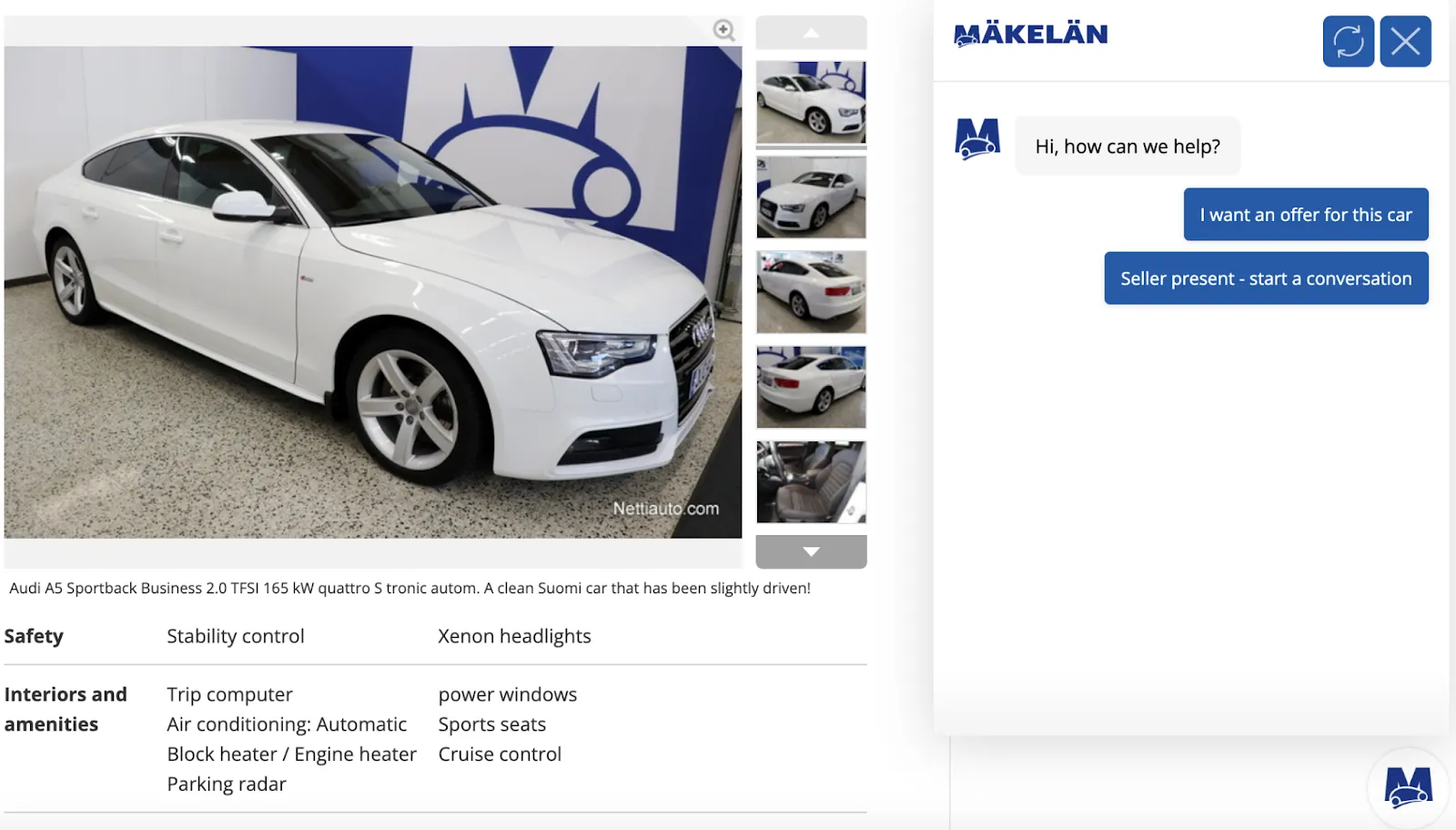
The chatbot turns a question into a next action. On a vehicle page it should know the listing. On a workshop page it should offer a service journey. On the homepage it can direct visitors to sales, trade-in or aftersales.
Check four things:
- access to inventory and approved content;
- rules for missing or conflicting information;
- minimal and purposeful data collection;
- human handover with the conversation context.
Mira AI combines guided search, answers and qualification in one managed journey.
4. Properly routed live chat
Live chat gives the buyer access to the right salesperson when the question becomes commercial. It should assign conversations by vehicle, brand, location or intent and retain the history.
At Saka, live chat supported by automation outside opening hours more than doubled website lead volume. This is a result from Saka’s specific deployment, not an industry average. Read the Saka customer case.
See Serviceform Live Chat for shared inbox, routing and handover capabilities.
5. A compliant finance calculator
A calculator turns the vehicle price into a budget the buyer can understand. Depending on the market and finance product, it may need to show:
- cash price;
- deposit;
- term;
- interest, fees and total cost;
- representative or required disclosures;
- whether the calculation is indicative.
The goal is not to display the lowest-looking monthly payment. It is to support fair comparison and prepare a useful conversation. Have the finance provider and legal owner approve the calculation, copy and consent flow.
6. Appointment booking connected to calendars
A generic form often creates another exchange: the buyer requests a time and waits for confirmation. A connected booking tool can show real availability for a test drive, trade-in appraisal or workshop visit.
The journey should state:
- vehicle or service;
- location;
- appointment duration;
- whether the slot is requested or confirmed;
- confirmation channel;
- change and cancellation process.
Collect only the information needed to make and manage the appointment.
7. CRM and full-journey measurement
The CRM should receive the lead and its context: vehicle, source, intent, answers, consent and next action. Without that context, the salesperson receives an empty record and the customer repeats the conversation.
Measure stages the team can improve:
- successful vehicle search;
- conversation started;
- qualified enquiry;
- test drive requested and confirmed;
- appointment attended;
- sale attributed under a documented rule.
Gedauto connected chat journeys to lead qualification, while Unione Movilidad created separate homepage and vehicle-page journeys. These are Serviceform-published customer cases, not independent audits. They show why context and routing matter more than raw conversation volume.
How to avoid an unmanageable stack
Ask every provider:
- Which system is the source of truth?
- How often is data synchronised?
- What happens when data is missing?
- How does a buyer move from AI to a person?
- Which context reaches the CRM?
- Who maintains content and rules?
- How are access, retention and deletion managed?
- Can you export data and replace the tool?
If an interactive AI system is used in the EU, review the applicable transparency and governance duties under the EU AI Act. Clearly telling a visitor that they are interacting with AI is a sensible design baseline.
Choose the first tool from the bottleneck
You lose enquiries outside opening hours: start with chat, automation and routing.
Visitors cannot find the right vehicle: start with feed quality and AI search.
Leads reach sales without context: start with qualification and CRM integration.
Test drives require repeated emails or calls: start with calendars and clear confirmations.
For a connected approach, see Serviceform for automotive dealerships. If you are comparing AI vendors specifically, continue with the 2026 automotive conversation tools guide.
Frequently asked questions
Which automotive ecommerce tool should a dealership install first?
Choose the stage where buyers currently abandon. Fix a poor stock feed before adding AI. If vehicle pages attract traffic but few enquiries, test a contextual conversation and appointment journey.
Should AI search replace vehicle filters?
Not necessarily. Filters support precise searches. AI helps buyers express a need, resolve contradictions and discover alternatives. A strong site can offer both.
Do live chat and a chatbot duplicate each other?
No. A chatbot provides immediate guidance and handles repeatable tasks. Live chat lets a person take over. Their value increases when the handover preserves the vehicle and conversation context.
How should we compare providers?
Use your own data and scenarios. Request a demonstration on real vehicle pages, test no-result cases and inspect exactly what arrives in your CRM.
How do we protect prospect data?
Collect only what the journey needs, state the purpose, restrict access and define retention. Have the person responsible for privacy in your organisation review the design and supplier terms.
Sources and review method
This guide was reviewed on 16 August 2026 using the named Serviceform customer cases, the Serviceform automotive product page, the official EU AI Act text and the European Commission’s data-protection guidance. Product fit and regulatory requirements must be verified for your market, systems and finance products.