



10 Common Marketing Challenges and How to Solve Them in 2026
The 10 marketing challenges that most often slow growth, with practical ways to improve retention, lead conversion, measurement, technology adoption and team alignment.
 Iranthi Gomes · CEO & Co-Founder
Short answer: The hardest marketing challenges in 2026 are not a lack of channels or tools. They are unclear positioning, weak customer retention, inconsistent lead follow-up, poor measurement and teams that cannot turn data into decisions. Solve those operating problems first. More campaigns will only amplify a broken system.
I have led Serviceform through multiple markets and worked with agencies and in-house teams serving automotive, real estate and other high-consideration industries. The strongest teams do three things consistently: choose a narrow commercial goal, make ownership visible and review evidence before adding another tactic.
This guide covers ten common marketing challenges and the practical response to each one.
Marketing challenge #1: Retaining clients
Clients rarely leave because an agency did not send enough activity reports. They leave when the business value is unclear, expectations drift or communication becomes reactive.
Build retention into delivery:
- agree on one commercial outcome and two or three leading indicators;
- document what the client owns and what your team owns;
- review progress in plain business language;
- raise risks before the client discovers them; and
- maintain a 90-day plan so the next step is always visible.
A useful review should answer: What changed, why did it change, what did we learn and what will we do next?

Marketing challenge #2: Working with a limited budget
A small budget becomes dangerous when it is spread across too many audiences, channels and offers. Concentration is usually more valuable than volume.
Start with the constraint: Which audience, problem and offer can produce the clearest evidence of demand? Fund the shortest path from attention to revenue, then stop or reduce work that does not support it. A practical priority order is:
- Fix conversion on pages that already receive qualified traffic.
- Improve follow-up for enquiries you already generate.
- Build one repeatable acquisition channel.
- Add experiments only when the core path is measurable.
Marketing challenge #3: Losing potential leads
The issue is often not traffic. It is the gap between a visitor becoming interested and a salesperson responding.
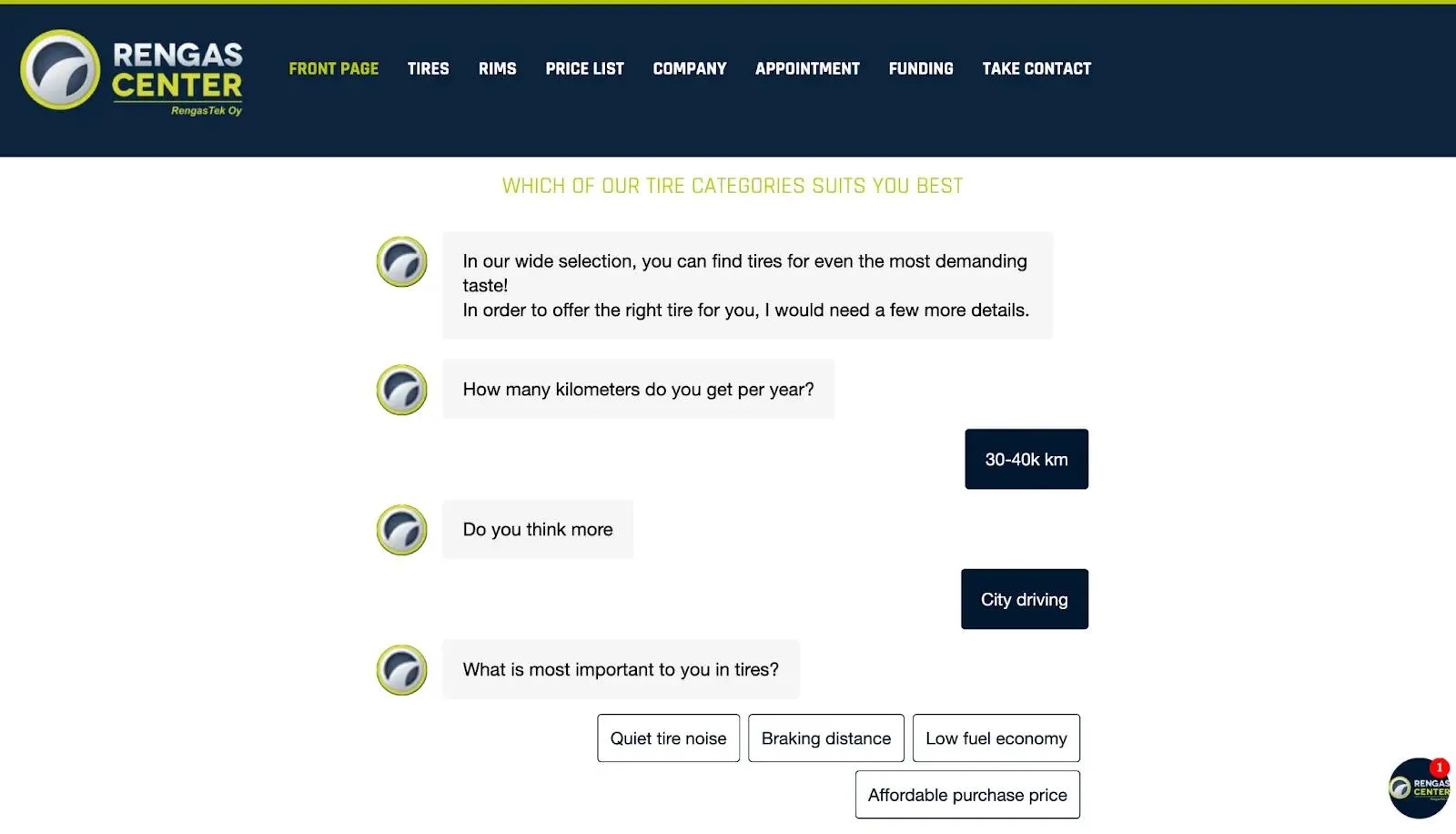
Map the lead journey from landing page to first human contact. Keep forms short, state what happens after submission and route high-intent enquiries immediately. A website AI chatbot can answer relevant questions and qualify visitors outside office hours, but it should offer a clear path to a person. If the same routing problem affects your clients, the Serviceform partner programme explains how agencies can deliver these tools through a commercial partnership.
Marketing challenge #4: Standing out in a crowded market
“Full-service” is not useful positioning by itself. Buyers need to recognise quickly who you help, what expensive problem you solve and why your approach is credible.
Replace broad claims with proof:
- choose a segment you understand;
- name the operational problem in the customer’s language;
- show the process, not only the final creative;
- publish case studies with context and methodology; and
- explain who is not a good fit.
Clear positioning can reduce the number of leads while improving their quality. That is a good trade.
Marketing challenge #5: Entering a new market
Do not translate an existing campaign and call it market entry. Customer expectations, competitors, buying processes and proof requirements can differ even when the product is unchanged.
Interview potential buyers and local salespeople before committing budget. Test one segment and one offer with a defined stop condition. Partnerships can shorten the learning curve, but only when responsibilities, lead ownership and customer support are explicit.

Marketing challenge #6: Personalising without creating chaos
Personalisation should make the next decision easier for the customer. It should not mean producing a unique campaign for every account.
Segment by a meaningful difference such as industry, buying stage, use case or account value. Then personalise the offer, proof and next step. Keep the operating system shared: one content framework, one measurement model and a controlled set of reusable components.
Marketing challenge #7: Taking responsible risks
Avoiding experiments feels safe, but repeating an underperforming plan is also a risk. The answer is not bigger bets. It is smaller, faster and more informative tests.
Write down the hypothesis, audience, primary measure, budget ceiling and decision date before launch. Change one important variable at a time. Google’s official guidance on experiments in Google Ads follows the same principle: test changes against an original campaign before applying them more widely.

Marketing challenge #8: Aligning marketing, sales and service
Departmental targets can create local wins and company-wide losses. Marketing optimises lead volume, sales rejects low-intent contacts and service receives promises it cannot fulfil.
Create one shared revenue journey. Define each lifecycle stage, the evidence needed to enter it, the owner and the response time. Review lost opportunities together. The goal is not perfect attribution. It is a team that can see where demand stops moving.
Marketing challenge #9: Adopting technology without buying shelfware
New software does not fix an undefined process. Before adding a tool, document the job, user, data required, system of record and success measure.
Run a time-limited pilot with real work. Check security, integration and data export before rollout. For AI tools, add human review where errors could affect customers, pricing or regulated decisions. Our practical guide to choosing a GDPR-compliant AI chatbot explains the data residency and processor questions that European businesses should ask.

Marketing challenge #10: Hiring and retaining capable people
Do not hire a specialist to compensate for a missing strategy. Define the outcomes and recurring work first, then decide whether the gap needs an employee, partner, contractor, automation or better training.
Good people stay when priorities are understandable, decision rights are clear and they can see the effect of their work. Protect focused time, document repeatable processes and give teams access to customer feedback instead of only dashboard metrics.
How should you prioritise these marketing challenges?
Start with the constraint closest to revenue:
- If qualified demand exists but does not convert, fix response, qualification and sales handoff.
- If customers leave, fix delivery clarity and retention before buying more traffic.
- If demand is weak, sharpen positioning and validate the offer.
- If execution is slow, fix ownership, process and technology in that order.
Choose one challenge for the next 30 days. Give it an owner, baseline and review date. A shorter list with clear accountability beats a transformation programme that nobody can operate.
Frequently asked questions about marketing challenges
What is the biggest marketing challenge in 2026?
For many businesses, it is connecting marketing activity to a commercial outcome. Channel dashboards can show clicks and leads while hiding slow follow-up, weak qualification or poor retention. Measure the full journey, not only campaign output.
How can a small business overcome marketing challenges with a limited budget?
Focus on one audience, one urgent problem and one repeatable channel. Improve conversion and follow-up before expanding reach. Every activity should support the same commercial goal.
How often should a marketing strategy be reviewed?
Review operating indicators weekly and strategic assumptions quarterly. Do not rewrite the strategy because one campaign had a bad week, but do not wait for an annual plan when customer evidence has changed.
Can AI solve marketing challenges?
AI can speed up research, drafting, support and lead qualification. It cannot choose a credible position, repair a weak offer or take accountability for customer outcomes. Use it inside a defined process with appropriate human review.
What should marketing and sales agree on?
They should share definitions for a qualified lead, lifecycle stages, ownership, response expectations and the feedback process for lost opportunities. Without those agreements, more leads often create more friction rather than more revenue.